The CROWN Act, signed into law by the governor in November of 2025, is heralded as an anti-discrimination law that moves civil rights forward in Pennsylvania. While the focus is on civil rights and the goal is to end discrimination, the legislation could affect workplace safety protocols. By extension, this could impact employer and employee liability for workplace accidents and access to workers’ compensation benefits.
Workers in Pennsylvania need to understand their rights and how to enforce those rights in light of the new laws. The team at Vanasse Law has decades of experience helping injured employees recover full benefits after an on-the-job injury, so we keep a close eye on any legal developments that could affect workers’ rights and workers’ compensation claims.
The acronym “CROWN” stands for “Creating a Respectful and Open World for Natural Hair.” This law amends the Pennsylvania Human Rights Act to specify that the term “race” also includes traits associated with race, including hair texture and protective hairstyles. In addition, the term “religious creed” is expanded to include hairstyles and head coverings that have historically been associated with certain religions. Starting in January of this year, employers with four or more employees are prohibited from discriminating based on hair type and texture, as well as certain hair coverings. Workplace dress codes that prohibit protected hairstyles or coverings would violate this new law.
However, employers are permitted certain exceptions in the name of health and safety or a bona fide occupational requirement. To be permitted to take action that would otherwise be considered discriminatory and a violation of an employee’s civil rights, an employee must be able to demonstrate that:
In addition to employers, the law applies to public schools and labor organizations.
The exceptions to the anti-discrimination provisions recognize that there are times when freedom of identity and expression need to be limited for health, safety, or other legitimate interests. Arguably, under the terms of the statute, employers should be allowed to establish requirements that hair beyond a certain length be tied back, covered, or netted to keep from getting tangled in machinery or contaminating food or other products. Similar restrictions should also be permissible in workplaces where there is a risk of fire or exposure to hazardous chemicals. Employers in the healthcare field should be able to require employees to take action that prevents hair from interfering with sterile environments.
But there may be many workplace environments where a hairstyle or hair covering poses an injury risk that is not as obvious. In these situations, employers may choose to allow workers the freedom to wear their hair in a way that leads to injury. For instance, an employee with long braided hair extensions could suffer whiplash when the braids get caught in a file drawer. Or a worker with hair piled in a high top knot could get caught in a door closing mechanism. Employers may allow hairstyles that seem unwise to avoid liability for discrimination.
So when an employee is injured due to an impractical fashion choice or expression of religious or cultural identity, can an employer or workers’ compensation insurer refuse to provide workers’ compensation benefits?
As a general rule, workers’ compensation in Pennsylvania is a no-fault system. That means employees do not need to prove that their employer was at fault for causing the injuries, and employers cannot deny responsibility because the employee was at fault. There are rare circumstances in which benefits may be denied because an employee was extremely irresponsible and acted outside the scope of employment. For instance, a worker who is injured after showing up for work intoxicated may not receive workers’ comp benefits. But if an employee is injured while exercising the right to wear an ethnic or religious hair style at work, the employer should not be permitted to deny workers’ compensation benefits.
Insurance companies are always looking for reasons to deny claims, however, so they may try to argue that an injury should not be covered because an employee’s actions put them beyond the scope of coverage. An experienced workers’ compensation attorney can present evidence and arguments to overcome the insurance company’s assertions.
The workers’ compensation system in Pennsylvania is supposed to provide a straightforward mechanism for injured employees to receive the medical care and personal resources they need to recover after being hurt on the job. However, the system instead provides a way for employers to limit their liability, while employees still have to make complex legal arguments to receive the benefits provided under the law.
It can be very difficult to succeed against workers’ comp insurers without guidance and representation of an experienced attorney. Often, it is necessary to present evidence to an administrative judge at a hearing before a claim will be approved.
At Vanasse Law, we’ve seen time and again that insurance companies that are supposed to pay workers’ compensation benefits will instead seize on any excuse they can find to deny claims. The CROWN Act may just give them one more argument they can use to assert that an employee’s injuries are not covered because of the employee’s actions. While their arguments may not succeed under legal scrutiny, it is difficult to impose that level of scrutiny without experienced legal assistance.
If you need to file a workers’ comp claim, or need help with a claim you’ve already filed, the team at Vanasse Law is ready to assist. We invite you to call us at 717-397-1010 or contact us online for a free consultation to learn more about the help we could provide in your situation.
30 East Roseville Road, Suite C
Lancaster, PA 17601
Phone: 717-397-1010
Office Hours:
After Hours: 717-471-2168
Fax: 717-397-2644
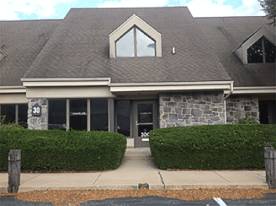
Vanasse Law LLC is conveniently located just north of center city Lancaster just off Route 30. We are in Sterling Center just off Lititz Pike/Route 501. Our office has plenty of free parking and is handicapped accessible.
Located in Lancaster, Pennsylvania, Vanasse Law LLC serves injured workers throughout Lancaster County and surrounding communities.
© 2018 by Vanasse Law LLC. All rights reserved. Sitemap | Disclaimer | Privacy Policy